Moving from a hot outdoor sauna into cold water is simple, intense, and deliberately uncomfortable. For many wellness and fitness enthusiasts in London, Ontario, this hot–cold pairing has become a popular recovery and stress-management practice rather than simply a passing trend.
This guide explains what contrast therapy actually involves, how heat and cold affect the body, what benefits are realistic, and how to use this practice safely and effectively.
What Is an Outdoor Sauna and Cold Plunge Session?
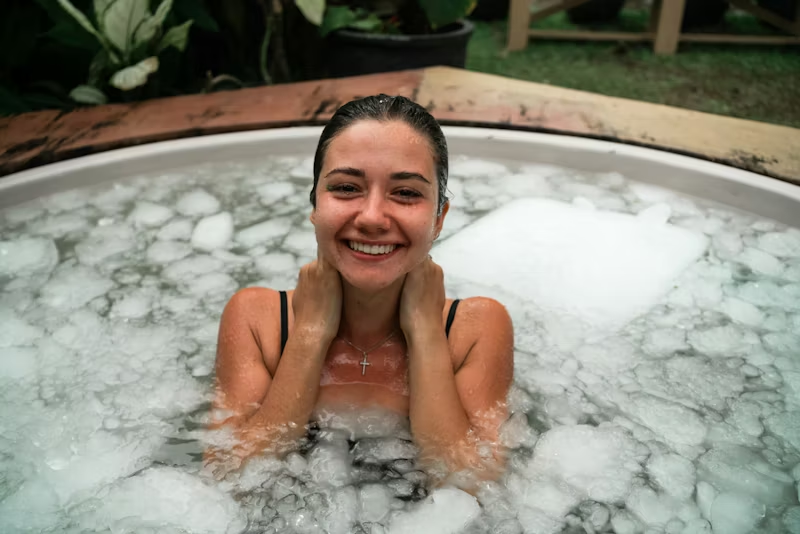
An outdoor sauna is a heated wooden space, typically using electric or wood-fired heaters, where temperatures commonly range from warm to very hot depending on the style. A cold plunge is a tub or pool filled with cold water, often kept between cool and very cold.
A typical contrast session includes:
- Sitting in the sauna for a short, controlled period
- Brief cold water immersion
- A rest phase to allow the body to rewarm
- One or more rounds, depending on experience and comfort
The goal is not endurance or extremes. The value comes from clear temperature contrast followed by recovery.
How Heat and Cold Affect the Body
Heat Exposure (Sauna)
In the sauna:
- Heart rate increases to levels that may be similar to those seen during light-to-moderate exercise, although sauna use does not provide the muscular or cardiovascular training benefits of physical activity.
- Blood vessels near the skin widen, increasing circulation
- Muscles and connective tissue tend to relax
Research has linked regular sauna use with improved cardiovascular markers and perceived muscle relaxation when used consistently as part of a healthy lifestyle.
Cold Exposure (Plunge)
Cold water immersion causes:
- Rapid narrowing of blood vessels near the skin
- Increased blood flow toward the core
- An immediate stress response, including faster breathing
When exposure is brief and controlled, cold immersion has been shown to reduce perceived muscle soreness after intense exercise, and to activate the nervous system.
The Contrast Effect
Moving from heat to cold, then back to rest, challenges circulation and the nervous system in a controlled way. Over time, this may:
- Reduce post-exercise muscle soreness
- Improve tolerance to physical stress
- Help the nervous system shift more efficiently from alertness to calm
Responses vary, and contrast therapy should be viewed as a recovery and regulation tool, not a medical treatment.
Mental Effects and Stress Regulation
Contrast therapy places you in discomfort without urgency. There is no task to complete, only sensation to manage.
In the sauna, sitting still in the heat encourages slowing down and disengaging from stimulation. In cold conditions, the challenge is staying calm as the body reacts.
Studies show that cold exposure activates the sympathetic nervous system, followed by a gradual return toward parasympathetic (calming) activity after the exposure ends. Many people report feeling mentally clear and settled afterward, even after short sessions.
Why Breathing Matters in the Cold
Cold water triggers an automatic gasp and rapid breathing. Learning to slow the breath is central to making cold immersion useful rather than overwhelming.
Slow, controlled breaths, whether through the nose or mouth, combined with longer exhales can:
- Reduce panic in the first moments of immersion
- Improve tolerance to cold exposure
- Train calm breathing under stress
This skill often transfers beyond the plunge, helping people manage everyday stress more effectively.
Solo or Shared Sessions
Some people prefer contrast therapy as a quiet, individual ritual. Others find consistency is easier with a partner or small group.
Shared sessions can:
- Improve adherence to a routine
- Add accountability and safety
- Create a sense of shared challenge without competition
Both approaches are valid. The best option is the one you will actually maintain.
Safety Considerations
Heat and cold place real demands on the cardiovascular and nervous systems. Extra caution is needed if you have:
- Heart disease or a history of stroke
- Unstable blood pressure
- Circulatory or respiratory conditions
- Recent surgery or pregnancy
General safety guidelines:
- Start with short sauna sessions and very brief cold exposure
- Avoid breath-holding in cold water
- Warm up gradually after cold immersion
- Never push through dizziness, confusion, or chest discomfort
This practice is not appropriate for everyone, and medical guidance should come from a qualified healthcare professional who knows your health history.
How to Add Contrast Therapy to Your Routine
For most people:
- One or two sessions per week is a reasonable starting point
- Keep early sessions conservative and consistent
- Pair contrast therapy with hydration, sleep, and regular movement
Contrast therapy supports recovery—it does not replace training, nutrition, or rest.
Outdoor Sauna and Cold Plunge in London, Ontario
For those who want to try contrast therapy without managing setup, temperature control, or safety alone, guided environments can be helpful.
At Longevity Lounge in London, Ontario, outdoor sauna and cold plunge sessions are offered in a structured, supervised setting. Guidance is provided on timing, transitions between heat and cold, and safe recovery, so the experience stays focused on regulation, not endurance.
If you’re curious about using heat and cold as part of a sustainable wellness routine, a guided session can be a practical place to start.
References
Cold Water Immersion
- Tipton MJ, et al. Cold water immersion: Physiological responses and health effects. European Journal of Applied Physiology.
https://link.springer.com/article/10.1007/s00421-025-05718-0 - Bleakley CM, Davison GW. Cold-water immersion and exercise-induced muscle damage. British Journal of Sports Medicine.
https://bjsm.bmj.com/content/44/3/179
Sauna and Recovery
- Kellmann M, et al. Recovery and stress balance in athletes. Journal of Sports Sciences.
https://www.tandfonline.com/doi/full/10.1080/02640414.2018.1496937
Cold Exposure and Mood
- Shevchuk NA. Adapted cold shower as a potential treatment for depression. Medical Hypotheses.
https://www.researchgate.net/publication/5854059_Adapted_cold_shower_as_a_potential_treatment_for_depression